


Free Case Evaluation (828) 702-8743
How the Juvenile Court System Works in North Carolina
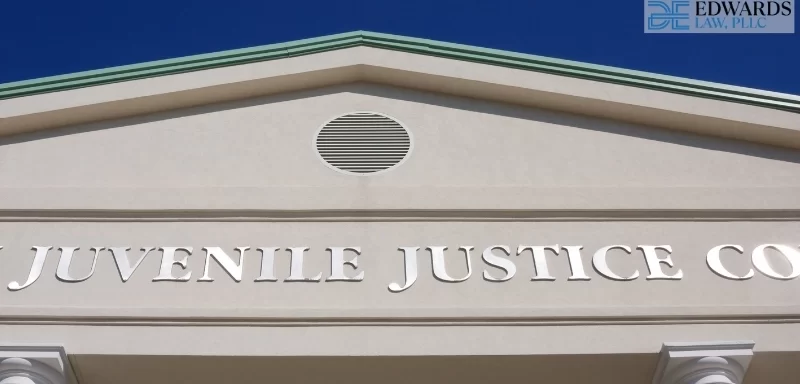
Learning that your child is facing law enforcement questioning or formal legal charges can be one of the most overwhelming experiences a parent can face. It is completely natural to feel anxious about what comes next, how your child’s future will be affected, and whether a single mistake could follow them into adulthood. Understanding how the juvenile court system works in North Carolina is the first step toward regaining control and taking effective action to protect your child.
Unlike the adult criminal justice system, which prioritizes punishment and public accountability, North Carolina’s juvenile justice system is built primarily around rehabilitation, intervention, and acting in the best interests of the youth. At Edwards Law, PLLC, our goal is to help parents navigate this unfamiliar process with clarity, confidence, and strong legal support.
What the Juvenile Court System Is in North Carolina
North Carolina’s juvenile court system operates within the District Court division and is governed by Chapter 7B of the North Carolina Juvenile Code. This statutory framework creates a distinct judicial process designed specifically for individuals under 18 years of age. Rather than labeling young people as “criminals” or conducting public trials, the District Court focuses on assessing a child’s needs, addressing underlying behavioral or environmental factors, and providing targeted rehabilitative services.
Under Chapter 7B, the juvenile court exercises jurisdiction over two primary types of cases:
- Delinquent Juveniles: A youth who is at least 10 years of age and under 18 years of age who commits an act that would be considered a crime or infraction if committed by an adult. This includes misdemeanor and felony offenses such as theft, property damage, simple assault, or drug possession. Additionally, under state law, 16- and 17-year-olds who commit violent Class A through E felonies bypass this system and are charged directly as adults.
- Undisciplined Juveniles: A youth between the ages of 10 and 17 who is regularly disobedient to parents or guardians, chronically truant from school, or frequently runs away from home. Undisciplined matters do not involve criminal acts; instead, they focus on family support, counseling, and community-based supervision.
Distinguishing between delinquency and undisciplined matters is critical because each pathway involves different legal standards, counselor duties, and court options.
“Raise the Age” — Who Juvenile Court Covers
For decades, North Carolina was the last state in the nation to automatically try all 16- and 17-year-olds as adults in criminal court, regardless of the severity of the charge. That changed significantly with the implementation of North Carolina’s landmark “Raise the Age” legislation. Under current law, most offenses allegedly committed by 16- and 17-year-olds are initially handled in juvenile court rather than adult criminal court.
However, “Raise the Age” includes specific jurisdictional limits and statutory carve-outs. While the law covers most misdemeanors and non-violent felonies, certain serious felony allegations involving older teenagers—or individuals with specific prior court histories—may be subject to mandatory or discretionary transfer to adult Superior Court.
Step by Step — How a Juvenile Case Moves Through Court
Navigating a delinquency case requires understanding the sequential stages established by Chapter 7B. A juvenile court case follows a structured progression from the initial law enforcement report to final court disposition.
- Step 1: Complaint and Intake
The juvenile process typically begins when a law enforcement officer, school resource officer, or citizen files a formal complaint with the Department of Public Safety Division of Juvenile Justice. The matter is immediately assigned to a juvenile court counselor. Because decisions made during intake determine whether a child enters the formal court system, early legal guidance during this phase can significantly influence the case outcome. - Step 2: The Juvenile Petition
If the juvenile court counselor approves the complaint for court processing, a formal document called a juvenile petition is drafted and filed. The petition sets forth the specific statutory allegations against the youth, who is legally referred to as the “respondent” rather than a defendant. Summonses are issued for mandatory court appearances in District Court. - Secure Custody and Detention Review
In certain circumstances involving severe safety risks, flight risk, or alleged serious felonies, a juvenile may be placed in secure custody (a juvenile detention facility) pending court hearings. Secure custody is not used as punishment; rather, it is reserved for situations where specific legal criteria are met. When a child is placed in secure custody, a District Court judge must hold a detention hearing within a strict statutory timeframe (typically within 5 calendar days) to review whether continued detention is necessary. In the vast majority of juvenile matters, youth remain in the care and custody of their parents or guardians while court proceedings are pending. - Step 3: The Adjudication Hearing
The adjudication hearing is the juvenile equivalent of an adult criminal trial. The hearing takes place in District Court before a judge; there are no jury trials in North Carolina juvenile proceedings. During adjudication, the prosecutor (representing the State) must present evidence to prove the allegations in the petition beyond a reasonable doubt. - Step 4: The Disposition Hearing
If a youth is adjudicated delinquent, the court proceeds to a disposition hearing. Unlike adult sentencing, which often focuses on punitive measures, disposition focuses entirely on designing an individualized plan for the youth’s accountability, supervision, and rehabilitative growth. Before the hearing, the juvenile court counselor prepares a comprehensive dispositional risk and needs assessment. The judge reviews this report and selects from statutory dispositional alternatives based on the seriousness of the offense class (Level 1, Level 2, or Level 3) and the juvenile’s prior history.
Diversion, Teen Court, and Alternatives to Formal Court
One of the most encouraging aspects of the juvenile justice system for parents is the availability of formal diversion programs. For first-time offenses or lower-level misdemeanors, a juvenile court counselor can offer a diversion plan or enter into a diversion contract instead of filing a petition.
A diversion plan typically requires the juvenile to complete community service, school attendance tracking, apology letters, or participation in local Teen Court programs, allowing the youth to resolve the matter without ever stepping inside a courtroom or receiving a juvenile record.
When a Juvenile Case Is Transferred to Adult Court
While the vast majority of juvenile cases remain in District Court, North Carolina law mandates or permits the transfer (also referred to as “bindover”) of certain serious cases to Superior Court, where the minor is tried under adult criminal standards.
A transfer to adult court carries severe consequences, including potential adult prison sentences and permanent criminal records. Preventing a bindover is often the single most critical objective in a serious juvenile case. Working with an experienced Asheville juvenile defense lawyer provides compelling evidence regarding the youth’s character, mental health, family structure, and rehabilitative potential, which is presented forcefully to keep the case under juvenile jurisdiction whenever legally possible.
Navigating transfer hearings requires rigorous preparation and deep familiarity with local court practices in Buncombe County and the 28th Judicial District. A knowledgeable North Carolina juvenile crime attorney can challenge probable cause, consult with child development experts, and advocate effectively before the court.
Juvenile Records, Confidentiality, and Expunction
Unlike adult criminal case files, which are public record, juvenile court records—including petitions, counselor files, and court transcripts—are confidential. They are not accessible to the general public, commercial background check companies, or landlords.
Furthermore, North Carolina law provides clear pathways for expunction (expungement) of juvenile records. Once a youth reaches 18 years of age (and provided at least 18 months have passed since the final court disposition or discharge from probation), families can petition the court to have juvenile delinquency records permanently erased. Certain offenses are not eligible for expunction.
Securing an expunction is a vital step to protect a student’s record and future opportunities as they transition into adulthood.
Why and When to Hire a Juvenile Crime Lawyer for Your Child
When your child is facing law enforcement contact or court proceedings, taking prompt action is essential. Deciding to hire a juvenile crime lawyer early in the process protects your child’s legal and constitutional rights at every stage—from the initial intake interview through disposition or expunction.
An experienced defense attorney can interact directly with juvenile court counselors to pursue diversion options before a petition is ever filed.
Contact Edwards Law Today
At Edwards Law, PLLC, attorney Doug Edwards brings a unique depth of perspective to juvenile defense. As a Board-Certified Specialist in NC State Criminal Law and a former Buncombe County First Assistant District Attorney, Doug Edwards has extensive, firsthand experience inside North Carolina courtrooms. He understands how prosecutors and juvenile court counselors evaluate cases, allowing him to anticipate state strategies and craft tailored defense approaches that serve the best interests of your child.
If your child is facing an intake review, juvenile petition, or delinquency hearing in Western North Carolina, do not wait to seek guidance. Contact Edwards Law, PLLC to speak with a dedicated Asheville juvenile defense attorney early, who will advocate tirelessly for your family and protect your child’s future.

He is a Board-Certified Specialist in State Criminal Law with vast experience in the local criminal justice system, having served as an Assistant District Attorney for over 10 years.
Quick Links
Area We Serve
Free Case Evaluation (828) 702-8743
© Copyright 2026 Edwards Law, PLLC. All rights reserved.
Digital Marketing By 
*Images are obtained under license from Canva and other third-party stock image providers, with attribution included where required.